 Lexington, Buena Vista & Rockbridge County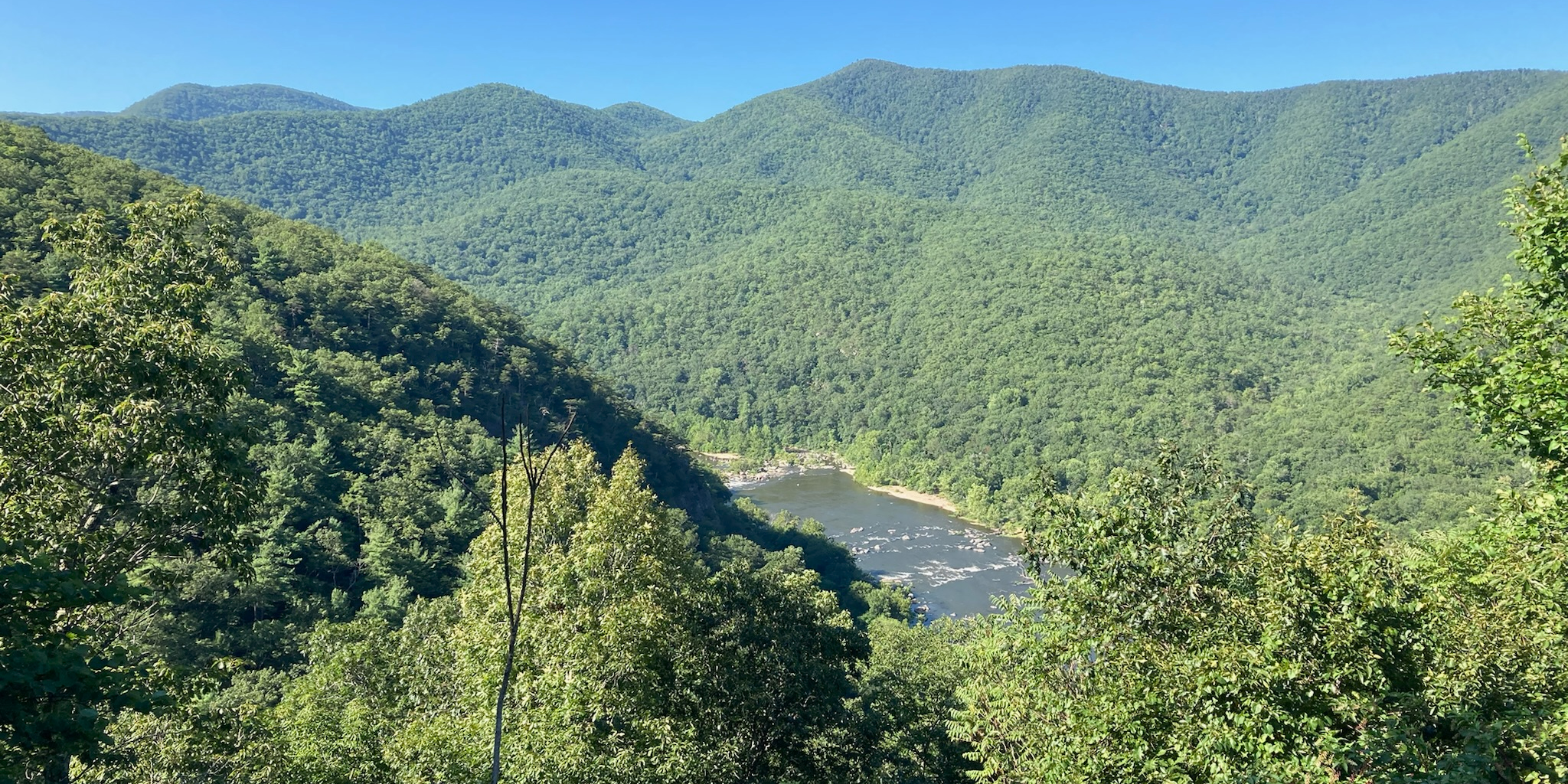
Black History Driving Tour
Lexington, Buena Vista & Rockbridge County
Black educators, entrepreneurs, soldiers, civic leaders, and heroes have lived and worked in Rockbridge County for several centuries. This driving tour stops at destinations that played an important role in their stories and in the community from the Colonial-era through Jim Crow and desegregation. From the Lexington Visitor Center, the tour covers 55 miles. An online slideshow and interactive map called “ Unheard Voices of Black Lexington ” documents Black entrepreneurs in downtown Lexington during the Jim Crow era. Click on the microphone icon to listen to podcasts featuring voices from the local Black community. Although it does not mark the site itself, this marker commemorates the first cemetery for Lexington’s slaves and free Blacks. In use from the early 1800s through 1880, the cemetery was located near the intersection of East Washington and Lewis Streets just east of today’s city hall and 1.5 miles from the historic marker. Visit the RHS website for more information about Jim Lewis and the two cemeteries. Stop by the Visitor Center for more information about Lexington’s history and numerous attractions. A self-guided walking tour takes visitors past historic buildings and homes in and around downtown, Washington & Lee University, and Virginia Military Institute. There’s also a walking tour map of nearby Diamond Hill and Green Hill, important Black communities in the city’s history. Horse-drawn carriage tours depart near the visitor center.
- 1
Original African-American Cemetery historic marker (Route 11 near junction with S Main St) Lewis was likely buried at the original cemetery, as were other women and men who were enslaved, emancipated, and served as the first Black voters in the Rockbridge area in 1867. The original school building closed in 1965 following desegregation.
- 🚗 about 31 min drive
- 2
If you spend time exploring Natural Bridge State Park, this itinerary should take a half day. For supplemental background about each stop, visit the links provided. Once considered one of the seven natural wonders of the world, Natural Bridge is a 215 ft-tall limestone arch in southern Rockbridge County. In 1774, Thomas Jefferson purchased Natural Bridge from King George III for 20 shillings. Jefferson later hired Patrick Henry, a free Black man born into slavery in eastern Virginia, to live on the property as a caretaker. Henry built a cabin 150 yards from the arch, protected the 157-acre tract from trespassers, paid the annual property taxes, and escorted visitors to the bridge, including Jefferson and his granddaughters. He also farmed an arable section of the property. Henry lived there from 1817 until his death in 1829. The RHS website shares more information about Patrick Henry. On the website you will also find information about Natural Bridge and its inclusion in the Green Book, a travel guidebook that listed restaurants and lodgings that welcomed Black travelers during the Jim Crow era. A video also surveys an exhibit curated by the Virginia Museum of Fine Arts called “Virginia Arcadia: The Natural Bridge and American Art,” featuring several artifacts and images held in Rockbridge County: https://www.youtube.com/watch?v=XWq_By-fFGc&t=1403s
- 🚗 about 15 min drive
- 3
- 4
James Alexander, also known as Jim Lewis, was a locally enslaved Black man who served as General Thomas J. “Stonewall” Jackson’s “body servant” during the Civil War. During heavy flooding in January 1854, a canal boat with 45 passengers became stranded in the wild waters of the James River at Balcony Falls. Padget led four other men in a brave rescue effort. Unable to fight the current while attempting to rescue the last passenger, Padget tragically drowned. Balcony Falls is difficult to access unless you’re on the river. At the T-junction of US 501/Hwy 130, turn right onto US 501 south and drive two miles to the James River Overlook. This large gravel pull-off is about a quarter mile past the Amherst County sign. Walk to the southern edge of the pull-off and look down to see the falls far below.
- 5
This small school was Buena Vista’s only school for Black children from 1892 to 1957, and students from first through seventh grade were enrolled here. When it opened, the two-room building did not have electricity or plumbing. A central wood stove – fueled by wood stored in the brick outbuilding – provided heat. The school burned in 1915 but was rebuilt. Electricity, a sink, and a water fountain were later added, but the facility never had indoor bathrooms. A third room was added in 1926 due to increasing enrollment. The building has been recognized as a Virginia Historic Landmark. Article from The Herald at Southern Virginia University on Medium. Edward “Black Ned” Tarr was the first free Black man to own property west of the Blue Ridge Mountains. Tarr’s blacksmith shop became a well-known landmark along the Great Wagon Road, which connected Philadelphia and the Carolinas. Route 11 roughly follows the path of the road through Virginia. A Righteous and Rascals of Rockbridge sidewalk paver at the Wells Fargo Plaza at the corner of Main and Nelson Streets in downtown Lexington commemorates Tarr. VMI History Professor Col. Turk McCleskey, gave a video lecture about Tarr at the Virginia Museum of History and Culture in 2015. Those interred here include Harry Lee and Eliza Walker. Also buried here are Levi Miller and Jefferson “Jeff” Shields, two Black men who were forced to fight for the Confederacy. They were later lionized by Confederate heritage groups. After the war Shields became a notable mason and a leader in First Baptist Church. Veterans from both World Wars are also buried in the cemetery.
- 🚗 about 19 min drive
- 6
Ned Tarr, the Great Wagon Road & Timber Ridge Presbyterian Church After purchasing his freedom in Philadelphia in 1752, Tarr traveled south to the village of Timber Ridge north of Lexington. In 1753, he helped establish Timber Ridge Presbyterian Church, the area's oldest church, and the following year he purchased a 270-acre tract along Mill Creek. Built in 1855, this Greek-Revival brick building houses a private school at the junction of I-81 and Route 11.
- 🚗 about 17 min drive
- 7
The land was subsequently developed, and the remains from the cemetery were purportedly moved to Evergreen Cemetery. However, there is little documentation to support these claims. Evergreen Cemetery (Evergreen Place, formerly New Market Place) Funerals began at Evergreen Cemetery in 1880 after the closure of the original “Colored Cemetery” near the corner of Washington and Lewis Streets a short drive west. Recognized as the city's traditional Black cemetery, Evergreen Cemetery covers about 5 ½ acres and is maintained by the City of Lexington, which also maintains Oak Grove Cemetery (formerly Stonewall Jackson Cemetery) on Main Street. Its access road was renamed from New Market Place, site of a notable 1864 battle involving VMI cadets.
- 🚗 about 4 min drive
- 8
Knights of Pythias Hall (221 N Main St) – Louis Armstrong, Cab Calloway, and Count Basie’s Orchestra all performed inside this building, once dubbed the House of Fun. Completed in 1926, it was owned by a Black chapter of the Knights of Pythias fraternal organization. After World War II, the building housed the African American Floyd-Davidson Post No. 126 of the American Legion. Marked by its rusticated concrete block exterior and a stepped parapet, it was moved a short distance south in 2014 to accommodate the new VMI Aquatic Center. Three historical panels outside the building detail its evolving social use over the course of a century.
- 🚶 about 7 min walk
- 9
From the 1940s-1965, high school students traveled to Lexington to continue their education at Lylburn Downing High School. The once-segregated Lylburn Downing School opened in 1927, replacing the overcrowded Freedmen’s Bureau School (also known as Central School and Lexington Colored Graded School) on Randolph Street. Thanks to pressure from local Black parents and activists, Downing originally served grades one through nine, then later expanded to include a high school, first granting degrees in 1944. The newer building now houses Lylburn Downing Middle School. Born enslaved in 1862, Lylburn Downing attended Lincoln University in Pennsylvania and became a respected Presbyterian minister in Roanoke. A longtime civic leader, he was a passionate advocate for education for African Americans, serving on integrated statewide educational committees. His parents attended Thomas J. “Stonewall” Jackson’s Sunday School lessons at Lexington Presbyterian Church. The county-wide African American school named for Reverend Downing was built in 1927. It sits atop Diamond Street, next to Richardson Park, which was named for local mid-20th century civic leader and Scoutmaster Leroy Richardson.
- 🚶 about 6 min walk
- 10
This grand house at the top of Henry St was constructed in the Federal-style in the late 1820s for Jacob Fuller, a classical scholar and librarian at Washington College. John Randolph Tucker, a founder of Washington & Lee Law School, bought the property in 1872. He remodeled it in the Italianate style and named it Blandome. Harry Lee Walker, the co-owner of Walker and Wood Brothers Meat Market, and his wife Eliza Bannister Walker bought the house in 1917. In the summer they advertised their home as a vacation spot for Black travelers, with rooms in the house as well as cabins and cottages on the three-acre property. Closed to the public. You’ll find an article, slideshow, and video about Eliza Bannister Walker, a civic leader, social activist, and poet, on the RHS website. Franklin Tourist Home (9 Tucker St) – Owned by Zack and Arleana Franklin, this house near Blandome was regularly included in the Green Book. Famous musicians who played at Washington & Lee stayed here as did Black chauffeurs who dropped off their employers at the RE Lee Hotel. It served as a tourist home until 1952.
- 🚶 about 3 min walk
- 11
The Rockbridge Historical Society (RHS) maintains a virtual archive of informative Black history articles and videos. Many of them were created during the Historical Society’s Local Black History series, which kicked off in 2020 and continues today. Walker was noted to be “the most prosperous colored man in Lexington,” at the time of his death in 1906. ‘ Ancient Jane,’ an anonymous young woman whose remains were found behind the Rockbridge Historical Society, was re-interred here. The Rockbridge Historical Society website shares several informative articles and videos about Lexington’s African American school, including “ The Impact of Educators of Color in our Community Then and Now.” Rockbridge Historical Society Museum (101 E. Washington Street) Headquarters to the area’s oldest local history organization, the Rockbridge Historical Society Museum hosts permanent exhibits on social history across four centuries, as well as rotating exhibits on distinctive themes, and events. Integrated within its onsite displays, digital resources, and ongoing research are a number of artifacts and resources engaging Local Black Histories. Many are freely accessible at RockbridgeHistory.org and the RHS YouTube Channel. RHS also provides advice on genealogical research, and the sale of books and maps. Free to the public, and open by appointment: RHS@RockbridgeHistory.org.