 Lexington, Buena Vista & Rockbridge County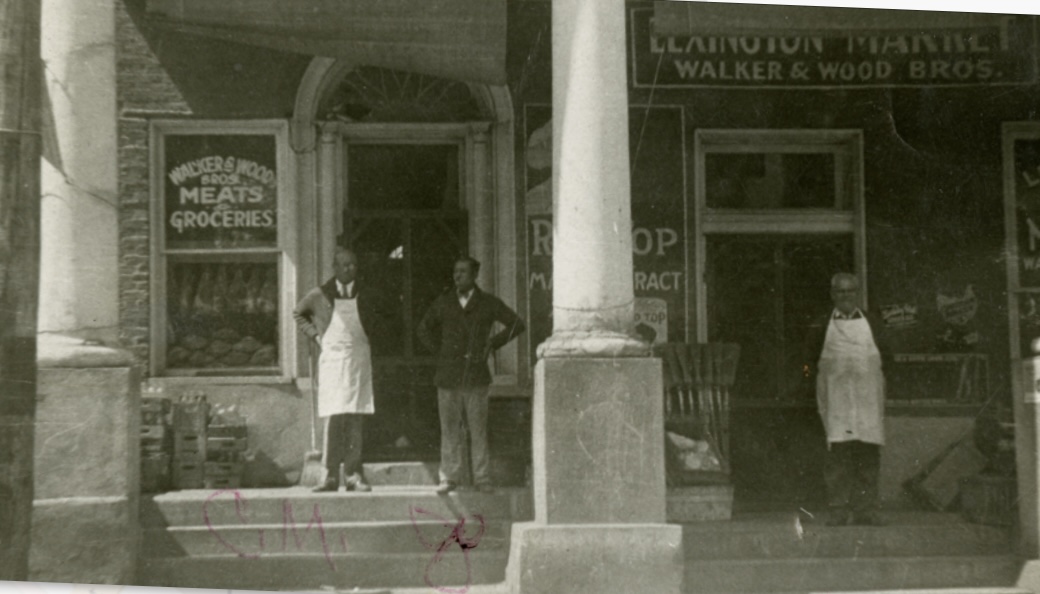
Black History Walking Tour
Downtown Lexington
A thriving Black commercial district lined North Main Street in downtown Lexington in the early 20th century, with offices, barber shops, social halls, a church, a butcher shop, and a restaurant or two serving the African American community. These neighborhoods developed after the Civil War, when several thousand slaves were emancipated in Rockbridge County. They joined a few hundred free Blacks already living here since Lexington’s founding in 1778. During the Jim Crow era, when most businesses were segregated by race, nearly one third of the population of Lexington was African American. Many destinations listed below were places of significance during the Jim Crow era. Others spotlight notable figures from the 18th and 19th centuries. The stops are found along a two-mile loop that begins at the Lexington Visitor Center. The digital map shares their location. Interpretive markers can be found on many of the buildings on North Main Street. As you walk, look for Righteous and Rascals of Rockbridge sidewalk pavers, or ‘Story Stones,’ managed by the Rockbridge Historical Society. These flat pavers describe noteworthy and often ‘colorful’ former residents, including numerous memorable figures from the Black community. ( www.rrrockbridge.org) For additional information, check out the resources and links provided at the end of the tour below.
- 1
Homes, guest houses, and more churches filled the surrounding Green Hill and Diamond Hill neighborhoods, the nucleus of the city’s Black community. It was featured in the Negro Motorist Green Book, which certified it as a welcoming and safe place for Black travelers during the Jim Crow era. It was the only Lexington eatery to be included from 1947 to 1957. A walking tour map, available at the Lexington Visitor Center, spotlights the Diamond Hill and Green Hill Communities.
- 🚶 about 4 min walk
- 2
Randolph Street United Methodist Church (118 S Randolph St) – After the Black and white members of the congregation separated in 1864, Black parishioners continued to worship at the frame church in this location. It was later torn down and replaced with the current brick structure. The church has been an important part of the local Black community ever since. Steel magnate and philanthropist Andrew Carnegie donated half of the costs of the church’s pipe organ in 1917.
- 🚶 about 4 min walk
- 3
Oak Grove Cemetery, Davy Buck headstone – Buck, an African American man, served as the sexton of the nearby Lexington Presbyterian Church for 40 years. The church and its cemetery were segregated but due to his loyal service to the church, Buck was given a plot in the cemetery. The white headstone is located in the far northwest corner of the cemetery near Main St. Buck died in 1858.
- 4
- 5
After serving in the Revolutionary War, Chavis began studying at the College of New Jersey, now Princeton University, then moved to Virginia in 1795 to complete his studies at Washington Academy, now Washington & Lee University. The Lexington Presbytery licensed him to preach in 1800. Chavis eventually returned to North Carolina, where he taught both Black and white students for many years. The marker is on W Washington Street in front of Evans Dining Hall ( W&L campus map).
- 🚗 about 4 min drive
- 6
Jackson House Museum (8 E Washington St) – VMI Instructor Maj. Thomas J. Jackson and his second wife Mary Anna Morrison bought this house in 1858. Enslaved African Americans Amy, Hetty, George, Cyrus, and Emma worked and lived on the property. Jackson left Lexington in April 1861 to fight for the Confederacy. Later known as “Stonewall,” he became a Lieutenant General. The house opened as a community hospital in 1907 and became a museum in 1954.
- 🚶 about 1 min walk
- 7
- 🚶 about 1 min walk
- 8
- 🚶 about 1 min walk
- 9
Established after the Civil War with the support of the Freedmen’s Bureau, it was one of Lexington’s first Black schools. It was in operation from 1865 to 1927, when the Lylburn Downing School opened in response to overcrowding Charles Henry Franklin rented half of the first floor as his barber shop. Two sisters, Estelle and Edna Washington, opened a restaurant in the other half. Walker and Wood Brothers Meat Market (30 N Main St) – Prominent Black businessman Harry Lee Walker bought this building, first built in 1820 and known in recent decades as the Willson-Walker House, in 1911 for use as a butcher shop, one of the most thriving businesses in the community. He provided the VMI mess hall with meat through an exclusive contract. His daughter Nannie married Clarence Wood, who joined the family business with his brother Joe. First Baptist Church (103 N Main St) – The congregation of the Lexington African Baptist Church worshiped in a frame building next to the site of the current church for 25 years beginning in 1867, right on the heels of emancipation. The current Gothic-Revival-style church was completed in 1896, and its congregation has played an active role in the local black community. Lylburn Downing, a Lexington-born African-American minister in Roanoke, was an early financial contributor for the construction of the church.